


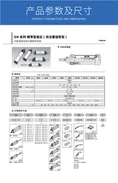


As a supplier of rodless cylinders, I often encounter customers who are eager to understand how to adjust the force output of these essential pneumatic components. Rodless cylinders are widely used in various industrial applications due to their compact design, high speed, and long stroke capabilities. However, achieving the right force output is crucial for optimal performance in different scenarios. In this blog post, I will share some practical methods and considerations for adjusting the force output of a rodless cylinder.
Understanding the Basics of Rodless Cylinder Force Output
Before delving into the adjustment methods, it's important to understand the factors that influence the force output of a rodless cylinder. The force generated by a rodless cylinder is primarily determined by two main factors: the air pressure supplied to the cylinder and the effective piston area.
The formula for calculating the force output of a pneumatic cylinder is:
[ F = P \times A ]
Where:
- ( F ) is the force output in Newtons (N)
- ( P ) is the air pressure in Pascals (Pa)
- ( A ) is the effective piston area in square meters (( m^2 ))
From this formula, we can see that increasing the air pressure or the effective piston area will result in a higher force output. However, there are practical limitations to both approaches, and other factors need to be considered as well.
Adjusting Air Pressure
One of the simplest and most common ways to adjust the force output of a rodless cylinder is by changing the air pressure supplied to the cylinder. Most pneumatic systems are equipped with pressure regulators that allow you to control the air pressure within a certain range.
Step 1: Identify the Recommended Pressure Range
Before making any adjustments, refer to the manufacturer's specifications for the rodless cylinder to determine the recommended air pressure range. Operating the cylinder outside of this range can lead to reduced performance, premature wear, or even damage to the cylinder.
Step 2: Locate the Pressure Regulator
The pressure regulator is typically installed near the air source or at the entry point of the pneumatic system. It usually has a knob or a screw that can be turned to increase or decrease the output pressure.
Step 3: Make Small Adjustments
To avoid sudden changes in force output, make small adjustments to the pressure regulator and monitor the cylinder's performance. Use a pressure gauge to measure the actual air pressure at the cylinder inlet. Gradually increase or decrease the pressure until the desired force output is achieved.
It's important to note that increasing the air pressure beyond the recommended range can increase the risk of component failure and may also require additional energy consumption. Therefore, it's crucial to find the right balance between force output and system efficiency.
Changing the Effective Piston Area
Another way to adjust the force output of a rodless cylinder is by changing the effective piston area. This can be achieved by using different piston sizes or by modifying the cylinder design.
Using Different Piston Sizes
Some rodless cylinders are available in multiple piston sizes, allowing you to choose the one that best suits your application requirements. A larger piston size will result in a greater effective piston area and, therefore, a higher force output. However, using a larger piston size may also increase the overall size and weight of the cylinder, as well as the air consumption.
Modifying the Cylinder Design
In some cases, it may be possible to modify the cylinder design to change the effective piston area. For example, you can add a booster or a multiplier to the cylinder to increase the force output without increasing the air pressure. However, this approach requires careful engineering and may not be suitable for all applications.
Considering Other Factors
In addition to air pressure and piston area, there are other factors that can affect the force output of a rodless cylinder. These factors include:
Friction
Friction between the piston and the cylinder bore, as well as between the seals and other components, can reduce the force output of the cylinder. To minimize friction, use high-quality seals and lubricants, and ensure that the cylinder is properly installed and aligned.
Load Characteristics
The type of load being applied to the cylinder can also affect its force output. For example, a static load may require a different force output than a dynamic load. It's important to consider the load characteristics when selecting and adjusting the rodless cylinder.


System Leakage
Leakage in the pneumatic system can result in a loss of air pressure and, therefore, a reduced force output. Regularly inspect the system for leaks and repair any damaged components to ensure optimal performance.
Conclusion
Adjusting the force output of a rodless cylinder requires a careful balance between air pressure, piston area, and other factors. By understanding the basic principles and following the methods outlined in this blog post, you can achieve the desired force output for your specific application.
If you have any further questions or need assistance with selecting or adjusting a rodless cylinder, please don't hesitate to contact us. We are a leading supplier of rodless cylinders and other pneumatic components, including Double Shaft Cylinder, Guide rod Cylinder, and Clamping Cylinder. Our team of experts is always ready to provide you with professional advice and support.
References
- Pneumatic Systems Handbook, Pneumatic Component Manufacturers Association
- Rodless Cylinder Product Manual, [Supplier's Name]