


Fiber Laser Accessories
What is Fiber Laser Accessories
Fiber Laser Accessories refer to the various components and parts that are used in conjunction with fiber laser machines. These accessories include components such as laser optics, laser cutting heads, fiber optic cables, chiller units, power supplies, and control systems.
Fiber laser accessories are designed to improve the performance and efficiency of fiber laser machines. For instance, laser optics help to shape the laser beam, making it more precise and focused. Laser cutting heads determine the speed, accuracy, and quality of the cutting process. Fiber optic cables connect the laser source to the cutting head, while chiller units maintain a suitable temperature in the laser machine.
Overall, fiber laser accessories play a vital role in the proper functioning of fiber laser machines and help to achieve high-quality results.
Why Choose Us
Application Fields
Since its establishment, the company has focused on laser industrial applications. We are committed to the sales and service of laser accessories, pneumatic components, and other mechanical accessories.
Customer Service
Our company has more than 150 employees, professional production lines and service teams, which can efficiently complete machine production and assembly. We also provide 24-hour online service, which can promptly respond to your questions and give you feedback on the progress of your order.
Main Products
Fiber Laser Accessories
Pneumatic Components
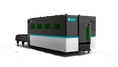
Laser Cutting Machines




Save space:When compared to gas or solid-state lasers, fiber lasers are more compact since the fiber can be coiled or bent to save space.
Faster cutting:Fiber lasers are dependable and display high vibrational and temperature steadiness and extended lifetime. Their nanosecond pulses and high peak power enhance engraving and marking. The improved beam quality and additional power produce faster cutting speeds and cleaner cut edges.
Maintenance-free:Unlike solid-state lasers, maintenance and replacement of fiber lasers are only required every six months.
Low energy consumption:Compared with gas lasers of the same power, the photoelectric conversion efficiency is much higher, thus are more energy-saving and environmentally friendly by saving energy by 50%~70%.
Types of Fiber Laser Accessories
Continuous Wave (CW) Lasers
IPG offers a wide selection of continuous wave (CW) fiber lasers that can be integrated into laser systems, ranging in power from 10 W to tens of kilowatts. The primary use of CW lasers is to have the beam turned on for extended periods of time for continuous processing. However, IPG CW lasers can also be modulated at frequencies from a few kHz up to tens of kHz to provide pulsed laser processing in millisecond to microsecond pulse duration regime if required.


Quasi Continuous Wave (QCW) Lasers
IPG Quasi Continuous Wave (QCW) fiber lasers produce peak power 10 times greater in pulsed mode than when operating in CW mode, providing Joules of energy at pulse durations from 10 microseconds to 100 milliseconds. This makes QCW lasers ideal for high precision welding, fine cutting and drilling applications where high pulse energy is required to initiate or sustain laser-material coupling, but where parts may be sensitive to the heat produced in CW processing.
Pulsed Nanosecond Lasers
IPG offers pulsed nanosecond lasers spanning pulse durations from 1 to >1000 ns ranging in average output power from 10 W to 5 kW.
The laser beam quality can be optimized for fine micromachining or high speed surface treatment applications such as ablation, cleaning and texturing. The lasers span the wavelength range from ultraviolet and green to mid-infrared. Adjustable pulse duration options and variety of beam delivery, such as 2D and 3D scanners greatly enhance their versatility.


Ultrafast Lasers
In micromachining applications requiring small heat affected zone ultrashort pulse duration lasers are frequently used. Building on well-established expertise in pulsed fiber laser technology, IPG Photonics has developed ultrafast fiber lasers designed for precision micro-materials processing. IPG ultrafast fiber lasers utilize the intrinsic advantages of fiber laser technology allowing the most robust and cost effective laser tools. IPG ultrafast fiber lasers increase micro-machining throughout, improve reliability and eliminate cost barriers to ownership.
Adjustable Mode Beam (AMB) Lasers
YLS-AMB Adjustable Mode Beam Lasers provide independent programmable adjustment of the output beam mode to any combination of a small-spot high intensity bright core to a larger ring-shaped beam allows processing a wider range of material thicknesses and optimizes welding and cutting performance. Welding with AMB laser virtually eliminates spatter, reduces cracking and improves the overall finish. AMB lasers also provide better kerf quality when cutting thick mild steel.


High Peak Power (HPP) Lasers
The High Peak Power (HPP) option on YLR and YLS lasers enables running a CW laser in pulsed mode with up to 2X increase in peak power in comparison with CW average power. High Peak Power provides advanced processing capabilities for faster piercing, increased output quality, repeatability and waste reduction. HPP increases overall processing speeds, repeatedly drills clean holes and delivers high quality cuts of intricate parts with fine features while reducing overall laser power requirements. HPP also enhances drilling capabilities by allowing clean, controlled drilling in thicker materials. For cutting applications, this means shorter lead-ins and denser part nesting, which reduces material cost and waste.
Material of Fiber Laser Accessories
Fiber laser accessories are made with high-quality materials because they play a crucial role in the performance of the laser machine. Of the commonly used materials of fiber laser accessories
Aluminum
PIt is a lightweight and durable material, commonly used in the fabrication of laser mounts and small parts
Copper
It is used in the fabrication of high-power fiber laser accessories such as cooling systems and heat exchangers.
Steel
It is used in the fabrication of laser mounts, brackets, and other structural components of the laser machine.
Ceramic
It is used for laser optics, lenses, and shields due to its high-temperature resistance and high optical transmittance.
Optical Glass
It is used in lenses, windows, and mirrors of fiber laser machines due to its high optical transmittance and low thermal expansion.
Silicon
It is used in semiconductor components of fiber laser machines due to its electrical properties and high-temperature resistance.
Sapphire
It is used in the fabrication of laser windows and optics due to its high hardness and high-temperature resistance.
Plastics
They are used in laser safety goggles, light guides, and enclosures due to their light weight and ease of fabrication.
Application of Fiber Laser Accessories

01
As a device capable of emitting laser light, the laser is widely used. According to the classification of materials, lasers are divided into fiber lasers, semiconductor lasers, solid-state lasers and CO2 lasers. The fastest-growing fiber lasers in recent years, according to relevant data, fiber lasers have occupied more than half of the global industrial market.

02
The popularity of fiber lasers is inextricably linked to the market environment and its own characteristics. Compared with other types of lasers, the advantages of low manufacturing cost, high stability, and fast heat dissipation are suitable for large-scale industrial cutting and welding requirements.
03
Ten years ago, the rapid expansion of mobile phone manufacturing, garment processing and other markets led to a spurt of demand for fiber lasers, which many people think it is the peak of the fiber laser industry. In recent years, the growth rate of mobile phones and clothing has slowed down, and many remarks about the “ceiling” of the fiber laser market have appeared.
04
With the advent of the era of intelligent manufacturing and the Internet of Things, the future application of fiber lasers will become more and more extensive, and new energy vehicles, new materials, optical fiber communication and other fields will soon be fully launched, and the market prospects will be limitless. With the full-scale outbreak of these emerging fields, the fiber laser market will also see greater growth in the next decade.

The process of fiber laser accessories includes the following steps:
● Selection of the fiber laser accessories based on the specific requirements of the application.
● Designing and manufacturing of the selected accessories by using CAD software and CNC machines.
● Inspection of the accessories to ensure their quality and performance.
● Testing of the accessories with the fiber laser system to ensure their compatibility and efficiency.
● Installation of the accessories onto the fiber laser system by following the manufacturer's guidelines.
● Calibration of the accessories to ensure their accuracy and reliability.
● Training of the operators on how to use the accessories to optimize the performance of the fiber laser system.
● Maintenance and repair of the accessories as needed to ensure their longevity and efficiency.
● Upgrading or replacing of the accessories if necessary to meet changing application requirements or improve performance.
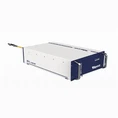
Fiber laser:The core fiber laser cutting parts, which belongs to the source of heart power and has high photoelectric conversion efficiency. Brands include Raycus, IPG, MAX, etc.
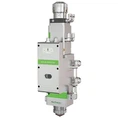
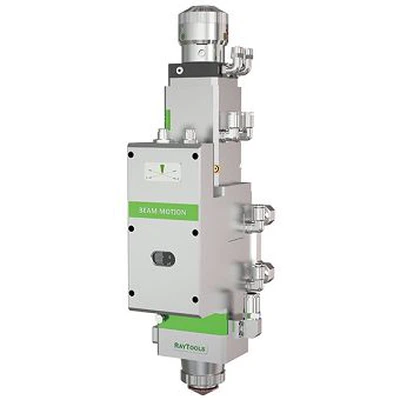
Laser cutter head:It is a laser output device with a nozzle, a focusing lens, and a focus tracking system. Currently, there are many manufacturers of laser cutting heads in the market, including RayTools, WSX, IPG, and Precitec.
Laser control board:Control the operation of the machine tool to realize the movement of the X, Y, and Z axes and control the fiber laser’s output power.
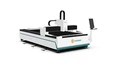
Laser cutting bed:It belongs to the rotation system of the laser cutting machine, mainly including the bed, beam, worktable, Z-axis system, gas control system, electric control system, transmission system, protective shell, safety system, etc.
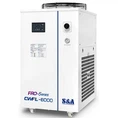
Water cooler:A cooling device can quickly and efficiently cool lasers, spindles, and other devices.
Air supply system:Including air source, filter device, and pipeline. The gas sources include bottled gas, liquefied gas, and compressed air.
Servo motor:A motor that controls the operation of mechanical elements in a servo system. The servo motor can accurately control the speed and position accuracy and convert the control signal into speed and position to drive the control object.
Cylinder:As a medium gas cylinder and an auxiliary gas cylinder, it provides auxiliary gas for industrial gas and cutting heads.
Air compressor for laser cutter:Provide and store compressed air.
Air Cooled Dryers and Filters:Used to provide clean and dry air to the laser generator and optical path to keep the optical path and mirrors working normally.
Dust collector:The smoke and dust during the processing are extracted and filtered to make the exhaust gas discharge meet the environmental protection standard.
Laser cutter exhaust blower:Remove scraps and scraps generated during processing.
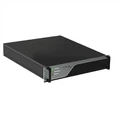
Power Supply:The power system connects lasers, CNC machine tools, and power supply systems. Mainly to prevent external power grid interference.
Maintenance Fiber Laser Accessories


●Before starting up the fiber laser cutting machine, first check the 2nd and 3rd reflecting mirror, as well as check whether there is any dust on the mirror or any broken in the mirror.
●Before cutting, please make sure the belows:
A. Check the pressure of air compressor to make sure its no less than 0.8Mpa, and try to open the protection air and up-down gun to check whether is smooth.
B. First up the cutting head, then run aside the edge frame, make sure the cutting pieces within the range of the setting area.
C. Simulate the processing output, make sure the cutting order whether is reasonable.
D. Adjust the height of cutting head to the suitable drilling place.
●When cutting, observe whether is cutting out at any moment, if not, first up the cutting head by hand then stop cutting, and check the cutting parameter whether is right, and the spray nozzle and protecting mirror whether is damage, adjust well, then return back to un-cutting, then continue to cut.
●When cutting, observe the cutting piece whether is turning over or up. If so, take over it in case of the collision between cutting head and piece, if the sheets is not plain, adjust its to the suitable drilling height (3-5mm) at any moment.
●When cutting, observe the cutting head whether is fire up, if so, stop cutting, and check the spray nozzle about the abrasion, judge the focus whether is changing, if so, increase or reduce the pad depended the situation.
●Every month clean the water-cooling machine one or two times, change the cycled water inside its, and use the distilled water without any impurity, can not use the tap water. purified water or mineral water.
●Must make sure the close down of light out signal and protecting gas so that it can change the spray nozzle. protecting mirror and focus mirror and so on.
●Clean off the metal dregs in the suctiondraft slagcatcher.
●After the laser power supply electrified, at any time can not have a direct eye to the light out hole and any place the laser may be reflecting.
Can a fiber laser engrave wood?
Fiber lasers use high-intensity beams of light to vaporize the wood surface, leaving behind a permanent mark. The laser energy heats the wood, causing it to vaporize and create an engraved pattern. The depth of the engraving can be controlled, allowing for deep grooves or shallow markings, depending on the desired effect.
One of the advantages of using a fiber laser for wood engraving is the ability to achieve fine details and intricate designs. The high precision of the laser beam allows for crisp and clear marks, even on small or detailed surfaces. Furthermore, the engraving is permanent, as the laser marks are resistant to fading and wear over time.
Different types of wood respond differently to laser engraving. Hardwoods such as oak and cherry generally produce a more pronounced contrast between the engraved area and the wood surface. Softer woods like pine, on the other hand, may produce a more subtle contrast. However, with proper techniques and settings, a fiber laser can be used to engrave almost any type of wood.
How thick can a Fiber Laser Accessories cut?
Fibre lasers are a type of solid-state laser that use a fibre optic cable to deliver the laser beam to the cutting head. They are widely used in industrial applications, such as metal cutting and welding, due to their high precision and efficiency. One of the key factors that determine the cutting capabilities of a fibre laser is the thickness of the material that can be cut.
The thickness that a fibre laser can cut depends on several factors, including the power and wavelength of the laser, the type of material being cut, and the cutting speed. In general, a higher power laser can cut thicker material, while a shorter wavelength laser can cut finer details. The type of material being cut also plays a role in determining the thickness that can be cut, with softer materials generally being easier to cut than harder materials.
In practical terms, a fibre laser can typically cut metal plates up to around 25mm thick with a power of 4-6 kW. However, some advanced machines can achieve even greater cutting capacity, with some able to cut through plates up to 40mm thick. It is important to note that these capabilities may vary depending on the specific machine and cutting conditions.
In addition to thickness, it is also important to consider the quality of the cut. A fibre laser can produce a very high-quality cut with minimal heat distortion and a narrow kerf width, which is particularly important for precision cutting applications. However, achieving these results requires careful selection of the cutting parameters and attention to details such as laser beam focus and nozzle alignment.
Our Factory

FAQ
As one of the most professional fiber laser accessories manufacturers and suppliers in China, we're featured by quality products and competitive price. Please rest assured to buy high-grade fiber laser accessories for sale here from our factory.
High Power Pulsed Raycus Fiber Laser Source