

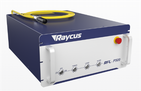


Most metals and organic materials have high absorption coefficients in the wavelength range of 916nm to 1200nm. Due to this advantage in absorption, fiber lasers have unique advantages in various aspects. Organic contaminants absorb laser energy strongly, and the temperature of the contaminants quickly rises to the evaporation point, achieving the goal of removing the contamination without damaging the substrate. The energy threshold for laser cleaning is then determined, which will affect the cleaning effect. Selecting an appropriate energy threshold requires considering the material's properties, microstructure, surface defects, as well as the wavelength and pulse width of the laser, among other factors.