

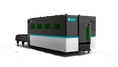
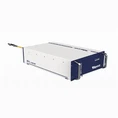

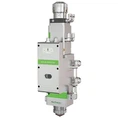

What is IPG Fiber Laser
IPG fiber lasers are the most compact and energy efficient lasers on the market, added benefits include: Virtually maintenance free. Reliably operates even in the harshest industrial environments including extreme vibration, dirt, humidity and temperature changes.
Benefits of IPG Fiber Laser
Highly Efficient Gain Medium
Unlike other lasers, IPG fiber laser achieve light amplification in optical fibers, which are doped with rare earth metal ions such as ytterbium (Yb3+), neodymium (Nd3+), thulium (Tm3+), praseodymium (Pr3+), or erbium (Er3+). These laser active ions can absorb most of the pump light, and then emit photons with characteristic frequencies via stimulated emission. The inherently flexible structure of fibers enables using much longer gain distances than other laser types. This provides a high optical gain.
Smart Feedback Loop through Fiber Bragg Gratings
Instead of using the conventional dielectric mirrors, the optical feedback in IPG fiber laser is usually provided by fiber Bragg gratings, a series of glass fibers with different refractive indices fusion-spliced in a periodic manner. These periodic structures can reflect the laser beam at certain wavelength and hence become the optical cavity of the fiber laser. Thus, for a fiber laser, the optical cavity is actually inside the gain medium.
Robust Optical Cavity
When talking about IPG fiber laser, one common pitfall to avoid is that IPG fiber lasers are not equivalent to the lasers that have optical fibers. In fiber-coupled diode lasers for example, optical fibers are employed only for beam delivery purposes and do not involve in the physics of stimulated emission. Hence, although optical fibers are indeed coupled with the laser systems, they still do not have all the superior qualities of a fiber laser. The unique integrated optical cavity with coiled fiber as the gain medium creates a robust and stable optical cavity.
Compact Footprint
One of the key advantages of IPG fiber laser is their compact layout. Compared with their rivals they sport a much smaller footprint at comparable output powers. This is because optical fibers are bendable and can be coiled into compact spaces. Furthermore, the flexibility of optical fibers also make possible further customization of the optical path, giving more freedom in design for various specific situations.
High Output Power
Since the gain medium in IPG fiber lasers are very thin and flexible, it is possible to have the optical fibers several kilometers long, and hence reach a very high gain of the pumping light. Also, due to the large surface area to volume ratio of optical fibers, the heat generated by IPG fiber lasers can by efficiently dissipated. Thus, IPG fiber lasers can function continuously at kilowatts levels without the need for sophisticated cooling systems.
Excellent Beam Quality
Normally, laser beam quality is interpreted as a measure of how tightly the beam can be focused, and it is quantified by an M2 factor, which is ideally equal to 1 for the highest beam quality. In a fiber laser, single-mode fibers typically offer the best beam performance, and can hence conceive significant applications. For instance, in laser cutting and welding, a high beam quality will allow for a long distance between the workpiece and the focusing object. This configuration will protect the optics from the debris and fumes. Most importantly, the reduced beam diameter can not only make possible finer structure manufacturing, but also the use of smaller and cheaper optical components.
High Reliability
IPG fiber lasers are of high reliability and almost maintenance-free, and since the optical path is enclosed within protective cladding layers, the laser beam is less susceptible to exterior disturbance. Thus, fiber laser usually boast excellent stability in high-temperature and vibrational working conditions.


Why Choose Us
Application Fields
Since its establishment, the company has focused on laser industrial applications. We are committed to the sales and service of laser accessories, pneumatic components, and other mechanical accessories.
Customer Service
Our company has more than 150 employees, professional production lines and service teams, which can efficiently complete machine production and assembly. We also provide 24-hour online service, which can promptly respond to your questions and give you feedback on the progress of your order.
Main Products
Fiber Laser Accessories
Pneumatic Components
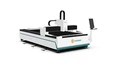
Laser Cutting Machines
Regular Cleaning: Keep the laser and its surrounding area clean to prevent dust and debris from accumulating on the optics and other components. Use clean, lint-free cloths or compressed air to dust off the exterior of the laser and optics.
Optical Alignment: Periodically check the alignment of the optical components, including lenses, mirrors, and beam delivery systems. Misalignment can affect beam quality and performance. Use appropriate tools and procedures to ensure that all components are properly aligned.
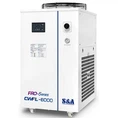
Cooling System Maintenance: IPG fiber lasers typically use a cooling system to dissipate heat generated during operation. Regularly check the cooling system, including the fans, filters, and cooling fluid (if applicable), to ensure they are clean and operating properly. Replace worn or clogged components as needed.
Power Supply and Cables: Inspect the power supply and cables regularly for any signs of damage or wear. Replace any damaged cables or components immediately to prevent power surges or failures.
Software Updates: If your IPG fiber laser is equipped with software for control or monitoring, keep it updated with the latest versions. Software updates can provide bug fixes, improved performance, and new features.
Preventative Maintenance: Implement a preventative maintenance schedule to regularly inspect and service the laser. This may include checking for loose connections, lubricating moving parts, and cleaning internal components as recommended by the manufacturer.
Manufacturer's Guidelines: Always follow the manufacturer's guidelines and recommendations for maintaining your specific IPG fiber laser model. These guidelines may include specific procedures, intervals, and parts replacement schedules.
Application of IPG Fiber Laser


Laser Cutting
IPG fiber lasers are commonly used in industrial cutting applications, such as cutting metals, plastics, and other materials. They can produce a high-power, narrow beam of light that can precisely and quickly cut through materials.
Laser Welding
IPG fiber lasers are also used in welding applications, where they can produce strong, high-quality welds. Their small size and ability to produce a focused beam make them suitable for welding small or intricate parts.
Laser Marking and Engraving
IPG fiber lasers can be used to create permanent marks or designs on materials such as metals, plastics, and wood. They can produce high-resolution images and text with great precision.
Laser Micromachining
In the field of micromachining, fiber lasers are used to create precise cuts or structures on a very small scale, such as in the manufacturing of microelectronics or medical devices.
Material Processing
Fiber lasers can be used for a variety of material processing tasks, including drilling, scoring, and annealing. They can process a wide range of materials, including metals, plastics, and composites.
How To Choose IPG Fiber Laser
Application Requirements
Start by defining your specific application requirements. Consider the materials you will be processing, the desired cutting, welding, or marking speeds, and the required beam quality. These factors will help you determine the power level, wavelength, and beam characteristics of the fiber laser you need.
Power and Performance
Consider the power level and performance capabilities of the IPG fiber laser. Higher power levels allow for faster processing speeds and the ability to cut thicker materials. However, higher power levels also require more cooling and may generate more heat, so ensure your system can handle the thermal load.
Beam Quality
Beam quality is crucial for achieving precise cuts, welds, or marks. Look for fiber lasers with a small beam diameter and low divergence, which provide a more focused and intense beam.
Ease of Integration
Consider the ease of integrating the fiber laser into your existing setup. Look for systems that are compact, modular, and easy to install. Also, consider the availability of compatible beam delivery systems, such as fiber optic cables and focusing lenses, to simplify the integration process.
Cost and Budget
Evaluate the cost of the fiber laser within your budget. Consider the upfront purchase cost, as well as the long-term costs of maintenance, repairs, and consumables. Ensure you compare systems from different manufacturers to find the best value for your money.
Reliability and Support
Research the reliability and customer support of the IPG fiber laser manufacturer. Look for manufacturers with a proven track record in the industry, as well as comprehensive warranties and service plans.
Technology Advancements
Consider the technology advancements and innovation of the IPG fiber laser. Look for manufacturers that invest in research and development to offer cutting-edge features and performance improvements.
References and Reviews
Seek references and reviews from other users or industries similar to yours. This can provide insights into the performance, reliability, and user experience of specific fiber laser models.
Factors Affecting The Life Of IPG Fiber Laser
Operating Conditions: The environmental conditions in which the laser operates can significantly impact its lifespan. Extreme temperatures, dust, humidity, and vibrations can all contribute to wear and tear on the laser's components, potentially shortening its overall life.
Usage Intensity: The frequency and duration of use can also affect the laser's lifespan. Continuous, high-intensity operation can lead to faster wear and tear on critical components, reducing the overall lifetime.
Quality of Components and Construction: The quality of materials and components used in the construction of the fiber laser plays a crucial role in its durability and lifespan. Lower-quality components may wear out or fail sooner than high-quality parts.
Maintenance and Servicing: Regular maintenance and servicing are essential for prolonging the lifespan of any laser system, including IPG fiber lasers. Failure to perform regular cleaning, calibration, and replacements of worn-out components can lead to premature failure.
Optical Alignment: Misalignment of optical components can lead to decreased performance and potentially damage to the laser system. Regular checks and adjustments of optical alignment are crucial to maintain peak performance and prevent premature wear.
Cooling System: The cooling system of the fiber laser is essential for maintaining stable operation and preventing thermal damage. Inefficient cooling can lead to overheating and shortened component lifespan.
How IPG Fiber Laser Works
The process starts with a pumping source, usually a high-power diode laser or a lamp, which pumps light into the fiber. This light is absorbed by a dopant material within the fiber core, typically ytterbium (Yb) or erbium (Er), exciting the atoms of the dopant material.
The excited atoms create a condition known as "population inversion," where more atoms are in a higher energy state than in a lower energy state. This condition is necessary for laser action to occur.
When a photon of light passes through the inverted population, it stimulates one of the excited atoms to emit a photon of identical wavelength and phase. This process is known as stimulated emission.
As more photons are emitted, they pass through the inverted population, stimulating more atoms to emit photons. This results in an avalanche effect, where the number of photons increases exponentially, creating a strong beam of coherent light.
The emitted light is then fed back into the fiber core through a partial reflector or mirror, known as an output coupler. This optical feedback maintains the coherence of the beam and allows the light to continue to be amplified as it passes through the inverted population multiple times.
The amplified light beam exits the fiber through the output coupler, producing a high-power, collimated laser beam.
Our Factory

Jinan Chaoqian Machinery Technology Co., Ltd. was established in 2019, located in Jinan, Shandong Province. Since its establishment, the company has focused on laser industrial applications,we are committed to the sales and service of laser accessories, pneumatic components and other mechanical accessories.
Asked Questions
Hot Tags: ipg fiber laser, China ipg fiber laser manufacturers, suppliers, factory, High Efficiency Fiber Laser Source, Fiber Laser Source With Integrated System, Rotary Cylinder, High Power Pulsed Fiber Lasers, laser source for laser accessories, High Power CW Fiber Laser Source


