


Fiber Laser Source
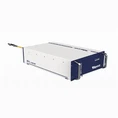
What is Fiber laser Source?
Fiber laser refers to a laser using rare earth element doped glass fiber as gain medium. Fiber laser can be developed on the basis of fiber amplifier: under the action of pump light, high power density is easy to form in the fiber, resulting in "particle number inversion" of laser energy level of laser working material, When the positive feedback loop is properly added, the laser oscillation output can be formed.
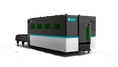
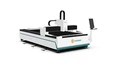
Laser is a beam with strong release ability, which can realize extremely fast cutting in a very short time. Metal laser cutting machine is mainly used to quickly cut carbon steel, stainless steel, aluminum alloy, galvanized sheet, copper, etc.
Why Choose Us
Application Fields
Since its establishment, the company has focused on laser industrial applications. We are committed to the sales and service of laser accessories, pneumatic components, and other mechanical accessories.
Customer Service
Our company has more than 150 employees, professional production lines and service teams, which can efficiently complete machine production and assembly. We also provide 24-hour online service, which can promptly respond to your questions and give you feedback on the progress of your order.
Main Products
Fiber Laser Accessories
Pneumatic Components
Laser Cutting Machines


High Power and Efficiency: A fiber laser source provides high power output along with maximum efficiency, resulting in higher productivity and cost savings.
Compact Design: Fiber lasers are compact, lightweight, and have a small footprint, making them easier to install and integrate into any manufacturing process.
Highly Precise: These lasers produce a highly focused beam, and due to their high frequency, they can produce very small and precise focal points. This results in greater accuracy in cutting, welding, and marking applications.
Lower Maintenance Costs: Fiber laser sources do not require any replacement parts for an extended period and have lower maintenance costs. They work with a solid-state laser oscillator, which eliminates costly gas discharge tubes, mirrors, and optical alignments.
Versatility: Fiber lasers can work with a wide range of materials, including metals, plastics, fabrics, and other non-metallic materials. They can also be used for a variety of applications, including welding, cutting, marking, and engraving, making them a versatile manufacturing tool.
Easy to Operate: Fiber lasers can be operated with ease due to their plug-and-play system; they can be connected with a computer network, and their settings can be remotely monitored and adjusted.
Fast Operation: Due to their high beam quality and speed, fiber lasers can perform tasks faster than other laser sources, resulting in increased productivity.
Types of Fiber laser Source


●Continuous fiber laser source
CW fiber lasers produce continuous, stable laser output, that is, the laser beam is continuously output at a constant power without significant pulses. This laser is suitable for applications that require a stable,high-quality beam, such as laser cutting, laser welding, laser marking, scientific research, etc. The output power of a CW fiber laser can range from a few watts to several kilowatts, depending on the laser design and application requirements.
●Quasi-Continuous fiber laser source
Quasi-CW fiber lasers produce pulsed laser output with a lower repetition rate and shorter pulse durations than CW fiber lasers. QCWFL is especially useful in some applications that require peak power but not continuous output, such as radar, medical laser therapy, laser drilling, etc. It typically delivers higher pulsed peak power, but lower average power than CW fiber lasers due to the spacing between pulses.
●Pulsed fiber laser source
Pulsed fiber lasers generate very short-duration pulse outputs, typically in the picosecond, femtosecond,or even sub-femtosecond range. These pulses have extremely short durations, resulting in very high peak power. Pulsed fiber lasers are commonly used in applications requiring high peak power and ultrafast pulses, such as laser processing, ultrafast optical research, nonlinear optical experiments, laser spectroscopy, etc.
●Visible light fiber laser source
A visible light fiber laser operates within the visible light wavelength range. Visible light is the spectrum that is perceptible to the human eye, with wavelengths usually ranging from about 380 nanometers to 750 nanometers. Visible light fiber lasers play a crucial role in applications such as laser displays, optical communication, optical imaging, life sciences research, and more. They are used in display technologies, laser projection, fluorescence imaging, microscope imaging, and a wide range of other applications.
●Infrared fiber laser source
An infrared fiber laser operates within the infrared wavelength range. Infrared light is generally not visible to the human eye and typically spans wavelengths from around 700 nanometers to 1 millimeter. Infrared fiber lasers find widespread applications in fields such as research, medical procedures, communication,and more. They are used in medical surgeries, material processing, remote sensing, infrared spectroscopic analysis, and various other domains.
Application of Fiber laser Source
Industrial Material Processing
Fiber lasers are capable of cutting, welding, marking, and engraving a variety of materials, including metals, plastics, and ceramics. They offer high precision and speed, making them ideal for use in industries such as automotive manufacturing, aerospace, and electronics.
Medical Applications
Fiber lasers are widely used in medical applications such as laser surgery, dental surgery, and ophthalmology. The high precision and controllability of fiber lasers make them ideal for use in delicate surgical procedures.
Telecommunications
Fiber lasers are used in telecommunications to transmit data over long distances. Fiber lasers are ideal for this application because they produce a coherent and steady beam of light that can carry a large amount of data without loss or distortion.
Entertainment
Fiber lasers are also used in entertainment applications such as laser light shows and laser displays. Fiber lasers are ideal for these applications because they offer high brightness and color control.
Material of Fiber laser Source
The material of fiber laser source is made of a glass or silica core, surrounded by a cladding layer, and an external coating layer. The core is doped with rare earth ions, such as erbium, ytterbium, or neodymium, which emit laser light when stimulated by an external energy source. The cladding layer helps to confine the laser light within the core, while the external coating layer protects the fiber from damage and contamination. The material composition of the fiber laser source is critical for its performance, including its power output, efficiency, and durability.
The Workings of Fiber Laser Sources
Fiber laser sources have revolutionized various industries with their remarkable capabilities and efficiency. These lasers are based on the principles of stimulated emission of radiation and utilize optical fibers as the gain medium. Fiber lasers offer several advantages, including high power output, exceptional beam quality, and efficient operation.
The Gain Medium
In fiber lasers, the gain medium is an optical fiber doped with specific rare-earth elements. The choice of dopants, such as erbium, ytterbium, or neodymium, depends on the desired laser wavelength and application. These dopants introduce energy levels within the optical fiber that are conducive to stimulated emission.
01
Pumping Process
To initiate stimulated emission, the gain medium must be excited or pumped. This is achieved by introducing energy, typically in the form of high-power diode lasers, into the optical fiber. The energy from the pump source elevates electrons within the gain medium to higher energy levels.
02
Stimulated Emission
When an electron transitions from a higher energy level to a lower one, it releases a photon. In a fiber laser, this process is stimulated when an incoming photon interacts with an excited electron, causing it to release an additional photon with the same frequency, direction, and phase. This stimulates a chain reaction, leading to the emission of a coherent and powerful beam of laser light.
03
Optical Resonator Cavity
The gain medium is placed within an optical resonator cavity in the form of a fiber. This cavity comprises two mirrors, one highly reflective and the other partially reflective. The arrangement of mirrors enables the photons to bounce back and forth, interacting with the gain medium repeatedly. This optical feedback enhances the stimulated emission process, leading to laser amplification.
04
Beam Quality and Efficiency
Fiber lasers are renowned for their exceptional beam quality. The use of optical fibers as the gain medium allows for precise control over the beam's characteristics, resulting in a high-quality, focused laser beam. Additionally, fiber lasers are highly efficient, converting a significant portion of the pump energy into laser light.
05
Process of Fiber laser Source
Pumping mechanism
The process begins by applying a high-energy pump source (usually a diode laser) to the fiber core of the laser. The pump light is absorbed by the active medium, which excites the atoms, causing them to release photons.


Active medium
The light energy then moves through the active medium, typically a doped optical fiber or fiber laser. The dopants used in the fiber generate the required energy levels and emissive states.
Emission
As light energy moves through the fiber core, it excites the electrons in the atoms. This process causes the excited atoms to release photons in a specific wavelength and direction, emitting a laser beam.


Amplification
The laser pulse will be amplified, which typically occurs by reflecting it back and forth through a fiber-optic loop.
Output
The amplified laser pulse emerges from the output fiber tip, ready for use in an application.


Continuous Wave Mode
A mode in which the laser beam fluency is uniform over time.
How to Maintain Fiber laser Source
In order to prevent unstable phenomena such as high temperature alarm, light interruption, missed operation, and weak light when the laser is used in a high-temperature environment , and to avoid premature weakening of the laser power and ensure that the laser can work normally, we kindly remind customers to take the following ventilation and cooling measures in advance.
When installing the fiber laser source, do not place the laser inlet or outlet too close to the casing. Leave enough space to ensure air circulation.
A cooling fan needs to be installed inside the chassis to achieve convection of air inside the chassis. If the indoor ambient temperature exceeds 30 ℃, it is recommended to install an air conditioner to avoid the fiber laser source working at high temperatures.
Regularly maintain the fiber laser source, blow the laser inlet and outlet with an air gun every month, and regularly clean the dust screen on the cabinet to prevent the laser outlet from being blocked by dust and affecting heat dissipation.
Components of Fiber laser Source
Fiber laser sources consist of several key components that work together to generate high-powered laser beams.
Fiber Optic Cable: The fiber optic cable is a thin, flexible cable that contains a core of optical fibers. This core is made of glass or plastic and is designed to carry light over long distances, with minimal loss of energy.
Pump Diode: The pump diode is a laser diode that provides the energy needed to excite the lasing material in the fiber core. The pump diode emits light at a specific wavelength, which matches the absorption peak of the lasing material.
Lasing Material: The lasing material is a rare-earth-doped glass or crystal that is placed inside the fiber core. When the pump diode injects energy into the lasing material, the electrons are excited and jump to a higher energy level. As the electrons fall back to the lower energy level, they release photons, which generate the laser beam.
Resonator Cavity: The resonator cavity is the space inside the fiber laser where the laser beam is generated and amplified. The cavity is made up of two mirrors that reflect the laser beam back and forth, amplifying it with each pass.
Output Coupler: The output coupler is a partial mirror that allows some of the laser beam to escape from the resonator cavity. The rest of the beam is reflected back into the cavity, where it continues to be amplified.
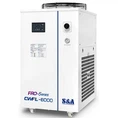
Cooling System: Fiber lasers generate a lot of heat, which can damage the lasing material and other components. To prevent this, fiber lasers use a cooling system, typically based on water or air, to dissipate the heat and maintain a stable operating temperature.
Which fiber laser source is best?
Each has its unique characteristics and advantages that make them suitable for different applications. The following are some of the most popular types of fiber laser sources and their respective features that make them the best.
Ytterbium-Doped Fiber Laser (YDFL)
This type of fiber laser source is one of the most commonly used for industrial applications. It provides high power, high beam quality, and excellent reliability. Because of its good absorption of infrared radiation, YDFL is best suited for cutting, welding, and drilling of metals and other hard materials.
Erbium-Doped Fiber Laser (EDFL)
EDFLs are used for telecommunications applications because of their high light amplification efficiency in the 1550nm wavelength range. They are the best choice for long-haul fiber-optic communications because of their long coherence length and high power output.
Raman Fiber Laser
Raman lasers use stimulated Raman scattering to generate a laser beam. They are suitable for sensing applications due to their high sensitivity to temperature and strain changes. They are also used for spectroscopy and communication applications due to their narrow linewidths and tunability.
Thulium-Doped Fiber Laser (TDFL)
TDFLs are best suited for medical applications, specifically in the field of urology. They provide excellent tissue ablation capabilities with high precision, and the 2-micron wavelength is absorbed well by water, which is one of the primary components of the human body. TDFLs are also used for scientific research and metal processing.
Why do we use a laser source in optical fiber?
Optical fibers are designed to transmit light signals over long distances, and a laser source is used to generate the high-intensity light required for efficient transmission. A laser is an intense source of light that emits a narrow, highly directional beam of coherent radiation. This coherent beam of light is essential for optical fibers because it allows the light to travel long distances with minimal signal loss.
The use of a laser source provides several advantages in optical fiber communication. Firstly, it enables high-speed data transmission over long distances. This is because lasers can produce light with a very high frequency, which allows for the encoding of large amounts of data on the light waves. Also, the coherence of the laser beam helps to keep the data from spreading out and becoming distorted, which is crucial for maintaining high quality signals.
Secondly, a laser source is highly efficient and can produce light that is close to monochromatic, or of a single wavelength. Monochromatic light is ideal for optical fiber because it reduces the effect of dispersion, or the spreading of the light signal over time. Dispersion can cause a significant reduction in the signal quality over long distances without a laser source.
Thirdly, lasers have excellent directionality, which means they can be focused and directed precisely through optical fibers. This directionality is critical in minimizing signal loss through the fiber, which can happen due to scattering, absorption, or other factors.
Our Factory

FAQ
As one of the most professional fiber laser source manufacturers and suppliers in China, we're featured by quality products and competitive price. Please rest assured to buy high-grade fiber laser source for sale here from our factory.
laser source for mining industry, IPG Fiber Laser, Q Switched Pulsed Fiber Lasers