

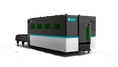

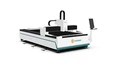
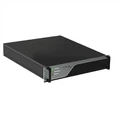
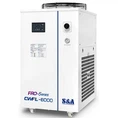

What Is Surrounding Dual Platform Laser Cutting Machine?
The surround dual-platform laser cutting machine is an advanced manufacturing equipment designed for efficient and precise cutting of a variety of materials. It is a non-contact manufacturing process that uses a tiny focused laser beam to burn through and cut materials such as metal sheets to create high-quality, dimensionally accurate designs. The laser cutting process uses heat to cut materials and involves directing a laser beam through a nozzle onto the material. When the laser beam is pointed at the surface of the material, the laser head heats the material until the target area of the material melts or vaporizes. It is this mixture of heat and pressure that allows the cutting action to occur.
Reduce laser hazards
The surround dual-platform laser cutting machine can isolate the laser from the operator to the greatest extent. Once all parameters are set and the sample cutting meets the standards, the side door of the cutting machine can be closed for fully enclosed cutting to prevent laser damage to the human body.
The enclosed design completely isolates the processing structure, material and transmission device from the operator, minimizing the risk of accidents. In addition, the surround dual-platform laser cutting machine is equipped with protective glass to prevent laser radiation, facilitate observation of the cutting process, and reduce laser damage to the eyes.
Reduce the spread of sparks and smoke
The surround dual-platform laser cutting machine is a hot processing process that produces a lot of sparks and smoke. The closed chamber of these machines helps control smoke and dust. They are usually equipped with a built-in filtration system to optimize the smoke management during the surround dual-platform laser cutting machine process, making the process more environmentally friendly.
Efficient and stable
The surround dual-platform laser cutting machine uses advanced laser technology and precise mechanical structure to achieve efficient and stable cutting effects and improve production efficiency.
Easy to operate
The surround dual-platform laser cutting machine adopts an intelligent operating system with a friendly interface, simple and convenient operation, high degree of automation, reduced manual intervention, and improved cutting quality.
Energy saving and environmental protection
The surround dual-platform laser cutting machine adopts advanced energy-saving technology to reduce energy consumption and environmental pollution, which meets the requirements of modern green production.
Noise reduction
The fully enclosed metal casing reduces noise and creates a quieter working environment.
Optimized structure
The surround dual-platform laser cutting machine can also be equipped with a double loading table. The front half is cut in the closed structure, and the back half is loaded. The cutting and loading are seamlessly connected to improve efficiency; the cutting and loading areas are clearly separated to improve safety.
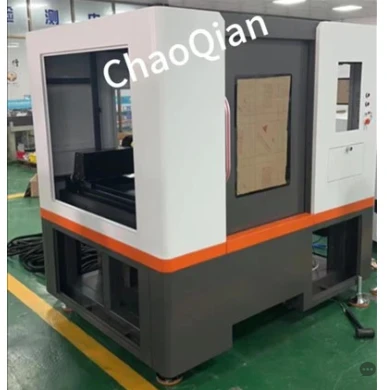
A6060 Linear Motor Precision Laser Cutting Machine
Linear motor drives with higher accuracy; The marble countertop has good rigidity; Improved performance of intelligent CNC systems;
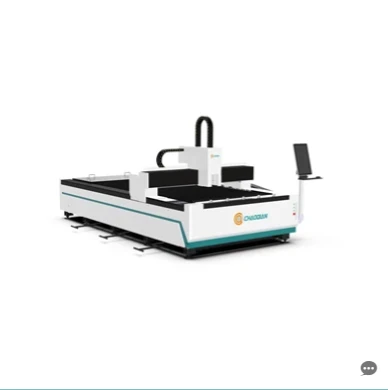
Single Platform Fiber Laser Cutting Machine
Brand servo driven precision gear and rack; Simple operation and maintenance; First choice for beginners of entry-level cutting machines
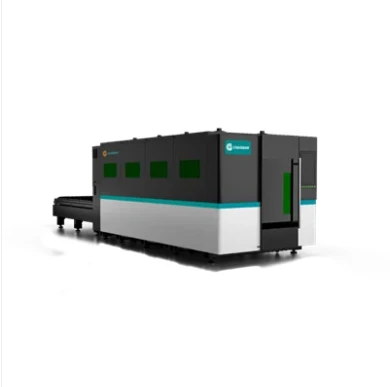
Surrounding Dual Platform Laser Cutting Machine
International standard protection ensures safe production; High energy-saving efficiency with medium to high power; Intelligent central control full machine real-time monitoring.
Why Choose Us
Application fields
Since its establishment, the company has focused on laser industrial applications. We are committed to the sales and service of laser accessories, pneumatic components, and other mechanical accessories.
Customer service
Our company has more than 150 employees, professional production lines and service teams, which can efficiently complete machine production and assembly. We also provide 24-hour online service, which can promptly respond to your questions and give you feedback on the progress of your order.
High quality
Our products are manufactured or executed to very high standards, using the finest materials and manufacturing processes.
Advanced equipment
A machine, tool or instrument designed with advanced technology and functionality to perform highly specific tasks with greater precision, efficiency and reliability.
What Are the Main Parameters of the Surround Dual-Platform Laser Cutting Machine?
Measured in kilowatts (kw), laser power determines the thickness and type of material that can be effectively cut. Proper power settings are critical for precise cutting; insufficient power may not penetrate the material, while excessive power can damage the material or reduce the quality of the cut.
Cutting speed is typically measured in meters per minute (m/min) and must be balanced with laser power and other parameters for efficient and precise cutting. Optimal speed ensures smooth cutting, minimizing the risk of burns or incomplete cuts.
Measured in hertz (hz), pulse frequency controls the number of laser pulses fired per second. It affects energy delivery, cutting efficiency, and quality. Higher frequencies improve smoothness on thin materials, while lower frequencies are better for thicker materials.
Measured in microseconds or nanoseconds, pulse duration affects the amount of energy delivered to the surface of the material. Short pulses are used for delicate work on delicate materials, while longer pulses are needed to make deeper cuts in thicker materials.
Wavelength determines how the laser interacts with different materials. Fiber lasers are effective for cutting metals, co2 lasers are effective for cutting non-metals, and nd:Yag lasers are precise for cutting metals.
The correct wavelength optimizes material absorption and cutting efficiency. Fiber lasers: 800 nm to 2200 nm, co2 lasers: 10.6 microns, nd:Yag lasers: 1.064 microns
The focus setting determines where the laser beam is focused on the material. Proper focus alignment ensures effective energy density for cutting. For best results, the focus should be centered through the material thickness to ensure an even cut.
The assist gas type and pressure significantly affects cut quality and efficiency. Oxygen speeds up cutting of thick steel, nitrogen prevents oxidation of stainless steel and aluminum, and compressed air is cost-effective for thin materials.
The nozzle diameter affects the focus and characteristics of the laser beam. Smaller diameters result in a more focused beam and finer cuts; larger diameters result in faster cutting of thicker materials, affecting cut quality and efficiency.
Standoff distance is the gap between the nozzle and the material surface, ensuring optimal gas flow and beam focusing. Maintaining a minimum distance increases gas pressure, clears the cutting path, and improves cut quality by ensuring efficient energy focus.
The repetition rate or pulse frequency defines how often the laser pulses per second. A higher repetition rate is suitable for fast cutting of thin materials, while a lower repetition rate provides more pulse energy for thick materials, reducing heat build-up and ensuring cut quality.
Application of Surrounding Dual Platform Laser Cutting Machine
Automotive sheet metal
The traditional sheet metal processing process is complicated, with low cutting accuracy, slow speed and uneven quality. The laser cutting machine has a high degree of flexibility, and can cut sheet metal accurately, quickly, with good quality and without tool wear, which improves the utilization rate of materials and achieves efficient processing.
Chassis cabinet
Including network cabinet, power cabinet, distribution box, etc. The traditional flat plate cutting efficiency is low and the cutting accuracy is difficult to guarantee. However, the laser cutting machine cannot perform standardized processing on thin metal sheets, has high cutting efficiency and short production cycle, which can increase the cutting speed and effectively save labor and time costs.
Agricultural machinery
The traditional sheet metal processing process is complicated and the production efficiency is low. The laser cutting machine is deeply loved by users for its high precision, high efficiency and precise cutting. The use of laser cutting machines can greatly save mold costs, flexible production, and can adapt to various plates and graphics; high cutting accuracy fully meets the high-quality production requirements of agricultural machinery, maximizes the utilization rate of plates, saves production costs, and saves time and efficiency.
Advertising industry
Mainly includes metal characters, door heads, various display racks, signs and other products. Laser cutting machines are flexible in cutting, fast in speed, and produce fine finished products without secondary polishing. They can perfectly adapt to customized fonts of various shapes, have a short production cycle, and are more likely to win the favor of customers and consumers.
Fitness equipment
With the development and popularization of sports concepts, the demand for community fitness facilities and gym equipment has gradually increased. In response to the metal cutting of a large number of pipes, the use of fiber laser cutting machines has greatly improved production efficiency and easily met order requirements.
Kitchenware
With the improvement of people's living standards, people are increasingly pursuing exquisite and high-quality kitchenware. Traditional cutting methods are single, with slow cutting speeds and low production quality. The laser cutting machine can achieve batch cutting of metals such as carbon steel, stainless steel, and aluminum alloys, with fast speed, good quality, and high output, and can be customized according to user needs.
Methods and Technologies Surrounding Dual-Platform Laser Cutting Machines

Fusion cutting
Fusion cutting works by using a high-pressure jet of an inert gas like argon or nitrogen to blow out the molten material from the cut created by the laser beam. An inert gas is used so that it does not react with the molten metal. The inert gas also behaves as a shielding gas for the molten edge.
Flame cutting
Not to be confused with oxy-acetylene cutting, laser flame cutting makes use of oxygen to assist with the cutting process by creating an exothermic oxidation reaction that helps reduce the laser energy requirements. The oxygen is also used to physically blow molten material from the cut. This process is also referred to as reactive laser cutting.
Remote cutting
Remote cutting also referred to as sublimation or vaporization cutting, is used on very thin or sensitive materials. There is no gas used during cutting and the laser is typically moved using a galvo scanner that directs the laser with a series of mirrors. The laser vaporizes or ablates the material instead of gas blowing it away. Remote cutting can be extremely quick on thin material.
Thermal stress fracture
Thermal stress fracture cutting is a technique used to cut material by inducing stress in the base material. An example would be a method employed to cut aluminum nitride where an unfocused beam is used to melt a very thin layer of material on the surface of the part to form aluminum oxide. Aluminum oxide and the base aluminum nitride have different thermal expansion ratios and as the materials cool down at different rates, this causes a stress field that cracks the part along the laser line.
Stealth dicing™
Stealth dicing™ is a cutting technique used to place the focal point of the laser inside a material. The laser creates a modified layer internal to the wafer (typically in the production of semiconductors). Once the wafer has been cut, it is expanded using a flexible membrane to cause cracks to propagate through the wafer to separate the individual chips that were internally cut in the material. This technique is mainly used to cut silicon wafers and is preferred to other techniques like diamond wheel cutting which produce inferior chips and require coolant during cutting.
Vector cutting
Vector cutting is a type of laser cutting used on parts that are made up of clean lines. An example of this would be business advertisement signs. Typically the laser cuts straight through the material.
Laser rastering
Laser rastering is the most commonly used technique when it comes to engraving an image onto the surface of a material. It works by taking a bitmap image as input and then turning that image into a set of instructions for the laser cutter which then burns the image into the base material.
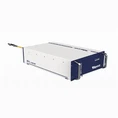
Laser
As the most essential part and the heart of a laser cutting macine, the laser is the core power source of high-power laser beams. Commonly, there are co2 lasers and fiber lasers mostly applied in manufacturing. Though both have pros and cons, what merits attention is that fibre lasers perform better in terms of accuracy, efficiency, cutting quality, lifespan and maintenance demands.
Optical system
An optical system incorporates reflective mirrors, focus lenses and other parts in order to focus laser beams onto the surface of the workpiece. The performance of the optical system directly influences the cutting accuracy and efficiency.
Cnc control system
The cnc control system is the main operating system which controls the movement of x, y, and z-axes. At the same time, it can also adjust the output power of laser cutters so as to ensue the cutting stability. You should notice that an advanced cnc control system improves the performance and stability of the machine.
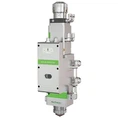
Cutting head
The cutting head, as the core component of a laser cutting machine consists of a nozzle, focus lenses and a focus tracking system. The cutting head will move according to the designed paths, and its height will be adjusted according to different materials, thicknesses and cutting methods. Premium cutting heads ensure high speed and accuracy cutting.
Servo motor
The servo motor as the key driving part of a laser cutting machine controls the movements of mechanical components. High-quality servo motors can guarantee cutting precision, positioning speed and repeated positioning accuracy.
Material compatibility
Determine the range of materials you will most often work with. For the majority of your work, the material's absorption spectrum must be consistent with the type of laser selected. This will help avoid significant complications and slower processing at higher energy levels, which can reduce the profitability and life of your equipment.
Work area
Consider the size of the typical job or block of raw material you anticipate cutting. Select a machine with a work area large enough to accommodate your expected work. Consider smaller jobs as well. These may prompt you to select two machines to effectively cover the required range.
Laser power
Laser power very directly affects the speed and thickness capacity of the equipment. Higher laser power can cut thicker materials faster, but it will affect the price of the equipment, which will need to be amortized over your job volume. Selecting an overpowered machine for a handful of jobs will affect profitability for all other jobs.
Precision/beam quality
If your expected workload requires high precision and intricate detail, pay close attention to the beam quality of the prospective machine you are considering. Fiber lasers generally offer better beam quality than co2 lasers, resulting in finer cuts and smoother engravings.
Speed/throughput
Consider your desired production volume and turnaround time. Fiber lasers are faster at cutting metals than co2 lasers, which is critical for industrial-scale operations-but this increases capital expenditure requirements.
Automation/software
Evaluate machine features that improve productivity and ease of use. Automation options and user-friendly software interfaces can significantly reduce setup and operation time. Advanced nesting software can reduce overhead by optimizing material usage without high job assembly labor costs.
Maintenance and reliability
Evaluate the implied maintenance requirements and reliability of future machines. Solid-state lasers (fiber and direct diode) have fewer "user-serviceable" parts and greater uptime than, for example, co2 lasers.
Cooling and extraction
Proper cooling/dross removal (airflow) and exhaust systems are critical for safe and efficient operation. Make sure the machine is equipped to remove fumes and debris during the cutting or engraving process.
Gas assist
Consider the type of gas assist you may need. Look for machines with lower consumption as a selection factor. Gas consumption is often viewed as a fixed cost, but can be improved. Better beam quality and finer cuts tend to require lower levels of gas assist because of reduced melt volume/debris.
Support
Evaluate the availability of technical support and service for the equipment. Make sure the manufacturer or supplier offers reliable support, including training, troubleshooting assistance, and spare parts availability. Low purchase prices that exclude on-site support and limited technical support can become an operational burden over time.
Budget
Create a budget for your laser surrounding dual platform laser cutting machine investment. Consider not only the initial purchase cost, but also ongoing expenses such as maintenance, consumables, and electricity. Labor can be a large part of your laser cutting shop's operating cost budget in the long run, so carefully consider automation aspects that can reduce its impact.
Company Introduction

Jinan Chaoqian Machinery Technology Co., Ltd. was established in 2019, located in Jinan, Shandong Province. Since its establishment, the company has focused on laser industrial applications,we are committed to the sales and service of laser accessories, pneumatic components and other mechanical accessories.
FAQ
Hot Tags: surrounding dual platform laser cutting machine, China surrounding dual platform laser cutting machine manufacturers, suppliers, factory, laser cutting for embossed material production, Laser Cleaning Machine Chiller, Rail Type Cylinder, , Fiber Laser Welding Head, Sheet Laser Cutting Heads


