


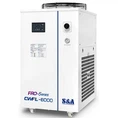

What is High Power Fiber Laser Chiller
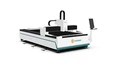
The fiber laser chiller is used to cool the laser generator and laser lens of the fiber laser cutting machine. Fiber laser machines have become more and more widely used in the metal processing industry.
Benefits of High Power Fiber Laser Chiller
Stable Laser Operation: High-power fiber laser chillers effectively dissipate the heat generated by high-power lasers, maintaining a stable operating temperature. This ensures consistent laser performance and prevents thermal drift or other issues that can affect laser accuracy and reliability.
Extended Laser Lifespan: By keeping the laser system cool, high-power fiber laser chillers help extend the lifespan of the laser itself. Excessive heat can damage laser components, leading to premature failure or performance degradation. By maintaining optimal operating temperatures, chillers protect the laser and allow it to operate more reliably for longer periods.
Enhanced Product Quality: Consistent laser performance is crucial for achieving high-quality results in manufacturing processes such as welding, cutting, and marking. High-power fiber laser chillers help maintain precise control over the laser beam, resulting in more accurate and consistent cuts, welds, or marks. This enhances the overall quality of the final product.
Improved Efficiency: By efficiently cooling the laser system, high-power fiber laser chillers help improve overall system efficiency. By reducing heat-related issues and maintaining optimal operating temperatures, chillers allow the laser to operate more efficiently, consuming less power and generating less waste heat.
Flexible and Compact Design: Modern high-power fiber laser chillers are designed for easy integration into existing systems. They are typically compact and can be easily installed in tight spaces, reducing the need for additional floor space or modifications to existing equipment.
Lower Operating Costs: Although high-power fiber laser chillers may have a higher upfront cost compared to some other cooling solutions, they often offer lower overall operating costs in the long run. Efficient cooling helps reduce energy consumption and extends the lifespan of the laser system, reducing the need for frequent repairs or replacements.
High-Precision Temperature Control:Some lasers require narrower temperature windows than others, so you'll need a laser chiller that can cool your system to the required specifications.
For example, a fiber laser should typically not exceed 26°C. So, you would need to find a laser water chiller that could handle the corresponding demands. The variation in temperature ranges means you'll need a laser water chiller with high-precision temperature control. This will help keep you within the narrowest ranges.
High Cooling Capacity:Knowing the temperature range is only part of matching the laser machine with the proper laser water chiller. You'll need to know the heat load that your chiller has to remove-otherwise, your system may still overheat.


Why Choose Us
Application Fields
Since its establishment, the company has focused on laser industrial applications. We are committed to the sales and service of laser accessories, pneumatic components, and other mechanical accessories.
Customer Service
Our company has more than 150 employees, professional production lines and service teams, which can efficiently complete machine production and assembly. We also provide 24-hour online service, which can promptly respond to your questions and give you feedback on the progress of your order.
Main Products
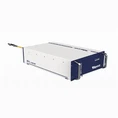
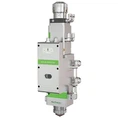
Fiber Laser Accessories
Pneumatic Components
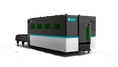
Laser Cutting Machines
Regular Cleaning: Keep the chiller and its surrounding area clean to prevent dust and dirt build-up. Dust can clog vents and affect the efficiency of the cooling system. Regularly clean the exterior of the chiller, fans, and radiators to maintain good airflow.
Monitor Coolant Levels: Check the coolant level regularly to ensure it is within the recommended range. Low coolant levels can affect the cooling efficiency and may damage the system. Top up the coolant as needed, following the manufacturer's recommendations.
Inspect Hoses and Connections: Regularly inspect the hoses, pipes, and connections for leaks or damage. Leaking coolant can lead to poor cooling performance and potential system failure. Replace damaged hoses or connections promptly.
Filter Replacement: The chiller may have filters to protect the system from debris and contamination. Check the condition of the filters and replace them as recommended by the manufacturer. Failed filters can restrict coolant flow and affect cooling performance.
Inspect Fans and Motors: Check the fans and motors regularly for proper operation. Clogged fans or failing motors can affect the cooling efficiency of the chiller. Replace or clean the fans as needed, and ensure the motors are running smoothly.
Monitor Temperature and Pressure: Use the monitoring system provided with the chiller to monitor the temperature and pressure of the coolant. Abnormal temperatures or pressures can indicate a problem with the system. Address any issues promptly to prevent further damage.
Scheduled Maintenance: Follow the manufacturer's recommended maintenance schedule for the chiller. This may include routine checks, adjustments, and cleaning tasks. Scheduled maintenance helps identify and address potential issues before they become critical.
Record Keeping: Keep a maintenance logbook or record system to track maintenance activities, repairs, and any issues encountered. This information can help you identify trends and plan future maintenance tasks.
Professional Service: Consider engaging a professional service provider to perform regular maintenance and inspections. They have the expertise and tools to ensure the chiller is operating efficiently and identify any potential issues.
Working Principle Of High Power Fiber Laser Chiller


Heat Exchange: The high-power fiber laser generates a significant amount of heat during operation. The chiller's primary function is to remove this heat from the laser system. It achieves this by circulating a coolant, typically water or a water-glycol mixture, through a heat exchanger.
Coolant Circulation: The coolant is pumped through a closed-loop system, circulating from the chiller unit to the laser system. Inside the laser system, the coolant absorbs the heat generated by the laser components.
Chilling Process: The heated coolant then returns to the chiller unit, where it passes through a refrigeration system. This refrigeration system typically consists of a compressor, condenser, expansion valve, and evaporator.
Compressor: The compressor increases the pressure of the coolant, raising its temperature.
Condenser: In the condenser, the high-pressure coolant releases heat to the surrounding environment, typically through fans or radiators.
Expansion Valve: The expansion valve reduces the pressure of the coolant, causing it to cool and expand.
Evaporator: In the evaporator, the low-pressure, cool coolant absorbs heat from the incoming heated coolant, cooling it down.
Temperature Control: The chiller unit includes a temperature control system that monitors and regulates the temperature of the coolant. This system ensures that the coolant is maintained at the desired temperature to provide consistent cooling for the laser system.
Return to the Laser System: The cooled coolant is then pumped back to the laser system, where it continues to absorb heat generated by the laser components. This cycle continues, maintaining a stable operating temperature for the laser system.
Things to Remember When Buying a High Power Fiber Laser Chiller
Laser Power Compatibility: The chiller's capacity should be compatible with the power output of your high-power fiber laser. Ensure that the chiller can handle the heat generated by the laser to maintain its stable operation.
Cooling Capacity and Performance: Evaluate the cooling capacity and performance of the chiller to ensure it can effectively dissipate the heat generated by the laser. Consider factors like heat transfer efficiency, coolant flow rate, and temperature control accuracy.
Reliability and Durability: Choose a chiller from a reputable manufacturer with a proven track record of reliability and durability. Ensure the product has undergone rigorous testing and quality control to minimize the risk of failure or malfunction.
Ease of Use and Maintenance: Consider the user-friendliness and ease of maintenance of the chiller. Look for features like user-friendly controls, monitoring systems, and easy access to components for routine maintenance and repairs.
Cost and Value: Evaluate the cost of the chiller versus its value and performance. Consider both the initial purchase cost and the long-term costs of operation, maintenance, and repairs. Ensure you select a product that offers the best overall value for your investment.
Service and Support: Consider the availability of service and support from the manufacturer or supplier. Ensure they provide timely responses to inquiries, offer technical support, and have a reliable warranty and repair service in case of any issues.
Compatibility and Integration: Ensure the chiller is compatible with your existing laser system and can be easily integrated into your workflow. Consider factors like dimensions, power requirements, and connectivity options.
Cutting and Welding Machines
High-power fiber lasers are widely used in industrial cutting and welding applications due to their high precision and efficiency. The laser chiller ensures that the laser system operates at a controlled temperature, minimizing thermal distortions and maximizing cutting or welding quality.
Laser Marking and Engraving
In precision marking and engraving processes, high-power fiber lasers provide fine detail and clarity. The laser chiller maintains the stability of the laser beam, ensuring consistent and high-quality marking or engraving results.
Laser Material Processing
High-power fiber lasers are used in various material processing applications, such as drilling, cutting, and welding of metals, plastics, and other materials. The laser chiller ensures that the laser beam remains stable and focused, providing precise and controlled material processing.
Research and Development
In scientific research and development, high-power fiber lasers are used for various experiments and applications that require precise and controlled laser beams. The laser chiller is essential for maintaining the stability of the laser system and ensuring accurate results.
Defense and Military Applications
High-power fiber lasers are also used in defense and military applications, such as lidar systems, missile guidance, and other precision targeting systems. The laser chiller ensures the reliable and stable operation of these critical systems.
Types of High Power Fiber Laser Chiller
Water-cooled chillers are a type of cooling system that uses water as the primary cooling medium. These chillers are commonly used in industrial and commercial applications where high-capacity cooling is required, such as in large air conditioning systems, refrigeration systems, and high-power laser systems.
In a water-cooled chiller, water is circulated through a closed-loop system, absorbing heat from the equipment or space that needs to be cooled. The heated water is then pumped to a heat exchanger, where it transfers the heat to another medium, typically air or another type of fluid. The cooled water is then recirculated back to the equipment, continuing the cooling process.
Water-cooled chillers offer several advantages compared to other types of cooling systems. First, water has a high heat capacity, which means it can absorb a lot of heat without significantly increasing in temperature. This allows water-cooled chillers to handle large heat loads efficiently.
An air-cooled chiller is a type of cooling system that uses air as the primary cooling medium, rather than water. These chillers are designed to dissipate heat by releasing it into the surrounding air, typically through the use of fans or blowers.
Air-cooled chillers are commonly used in applications where a water supply is limited or not feasible, or where the environment is well-suited for air-based cooling. They are also popular in smaller systems or indoor environments where space is limited.
In an air-cooled chiller, a refrigerant cycle is used to cool the internal components of the chiller. The refrigerant absorbs heat from the equipment or space being cooled and then carries it to an outdoor condenser unit. In the condenser, the heat is released into the air through a fan-assisted heat exchanger. The cooled refrigerant is then recirculated back to the chiller, continuing the cooling process.
A liquid-to-liquid heat exchanger is a device used to transfer heat between two different liquids without the two liquids coming into direct contact with each other. This type of heat exchanger operates on the principle of thermal conductivity, where heat is transferred through a wall or separator that separates the two fluids.
Our Factory

Jinan Chaoqian Machinery Technology Co., Ltd. was established in 2019, located in Jinan, Shandong Province. Since its establishment, the company has focused on laser industrial applications,we are committed to the sales and service of laser accessories, pneumatic components and other mechanical accessories.
Asked Questions
Hot Tags: high power fiber laser chiller, China high power fiber laser chiller manufacturers, suppliers, factory, Water Chiller Laser Cutting Machine, 70L Fiber Laser Chiller, Rotary Cylinder, CE Fiber Laser Chiller with Heater, , High Power Fiber Laser Chiller


