



Introduction
Water chillers are essential components in HVAC systems that help to lower the temperature of water used in air conditioning, refrigeration, and other applications. However, many people wonder just how cold water chillers can get. In this article, we will explore the answer to this question in detail.
What are Water Chillers?
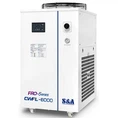
Water chillers are refrigeration systems that are used to cool water by removing heat from it. They consist of a compressor, a condenser, an expansion valve, and an evaporator.
The compressor pumps the refrigerant through the system, and the condenser removes heat from the refrigerant by cooling it with air or water. The expansion valve reduces the pressure of the refrigerant, causing it to expand and cool down further. Finally, the evaporator absorbs heat from the water by circulating refrigerant through it.
How Cold Can Water Chillers Get?
The answer to this question depends on several factors, including the type of refrigerant used, the design of the water chiller, and the intended application. However, most water chillers can cool water to temperatures between 0°C and 10°C (32°F to 50°F).
The actual temperature that a water chiller can achieve depends on the boiling point and critical temperature of the refrigerant used. For example, water chillers that use R-134a refrigerant can typically cool water to a temperature of 3°C (37.4°F). However, water chillers that use R-22 refrigerant can cool water to a lower temperature of -5°C (23°F).
In some specialized applications, such as in the pharmaceutical industry or in scientific research, water chillers may be capable of cooling water to much lower temperatures. These chillers are often designed with specialized components that can withstand extreme cold temperatures.
Factors Affecting the Cooling Ability of Water Chillers
Several factors can affect the cooling ability of water chillers. These include:
1. The type of refrigerant used: Different refrigerants have different boiling points and critical temperatures, which affect how cold the water chiller can get.
2. The design of the chiller: The size of the evaporator and condenser, the type of compressor used, and other design factors can impact the cooling ability of the water chiller.
3. Ambient temperature: Water chillers operate less efficiently in hot environments, which can limit their cooling ability.
4. Flow rate of water: Faster water flow rates can reduce the amount of time that water spends in the chiller, which can limit its cooling ability.
Applications of Water Chillers
Water chillers are used in a wide range of applications, including:
1. Air conditioning systems: Water chillers are used to cool water that is circulated through air handler units to cool and dehumidify the air in commercial and residential buildings.
2. Industrial processes: Water chillers are used to cool water used in manufacturing processes, such as plastics production, food processing, and beverage production.
3. Medical and pharmaceutical applications: Water chillers are used to cool water that is used in medical and pharmaceutical applications, such as MRI machines and laboratory testing.
4. Scientific research: Water chillers are used to cool water in scientific research applications, such as in testing and research laboratories.
Conclusion
In conclusion, water chillers are essential components in many HVAC systems and are used to cool water for a wide range of applications. The actual temperature that a water chiller can achieve depends on several factors, including the type of refrigerant used, the design of the chiller, and the intended application. Despite these factors, most water chillers can cool water to temperatures between 0°C and 10°C (32°F to 50°F).