


Is laser welding stronger than TIG?
Introduction:
When it comes to joining two pieces of metal together, various methods can be employed, including laser welding and Tungsten Inert Gas (TIG) welding. Both processes are widely used in industries ranging from manufacturing and automotive to aerospace and nuclear sectors. However, a common question that arises is whether laser welding is stronger than TIG. In this comprehensive article, we will explore the characteristics, advantages, and disadvantages of both techniques, and analyze their inherent strengths to answer this question.
Laser Welding:
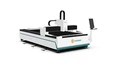
Laser welding is a process that utilizes a highly concentrated beam of light energy, known as a laser, to melt and fuse metal pieces together. The laser beam, produced by an amplification of stimulated emission of radiation, can generate intense heat, creating a weld pool and bonding the materials. This technology has gained immense popularity due to its precision, speed, and versatility in welding various materials, including aluminum, stainless steel, and titanium.
One advantage of laser welding is its high welding speed. The concentrated energy from the laser allows for rapid heating and cooling, significantly reducing the overall welding time. Moreover, the narrow and focused heat-affected zone results in minimal distortion of the workpiece, making it ideal for applications that require precise tolerances.
Another strength of laser welding is its ability to produce deep and narrow welds. The high-density energy beam allows for a concentrated heat input, resulting in high aspect ratio welds with excellent depth-to-width ratios. This characteristic is particularly advantageous when joining materials with high thermal conductivity, as it minimizes the heat-affected zone and ensures strong and reliable welds.
Furthermore, laser welding offers enhanced weld quality and aesthetics. The focused energy beam provides a concentrated heat input, resulting in a smaller fusion area and reduced porosity. This leads to a higher weld strength and improved visual appearance of the joint. As a result, laser welds often require little to no post-welding cleanup, saving time and resources.
However, laser welding also has its limitations. One major drawback is the high initial cost of equipment and maintenance. Laser welding machines, including the laser source and associated optics, can be expensive, requiring significant investment for implementation. Additionally, the complexity of the technology may necessitate specialized operators or technicians, further increasing operational costs.
Another limitation of laser welding is its relatively shallow penetration when compared to other welding methods. While laser welding can achieve high aspect ratio welds, it may not be suitable for applications requiring deep penetration, such as welding thick pieces of metal. In such cases, alternative welding techniques like TIG may be more appropriate.
TIG Welding:
Tungsten Inert Gas (TIG) welding, also known as Gas Tungsten Arc Welding (GTAW), is a process that utilizes a non-consumable tungsten electrode to produce an electric arc. Inert gases, such as Argon or Helium, are employed to shield the weld area from atmospheric contamination, ensuring high-quality welds. TIG welding is widely valued for its precision, versatility, and aesthetic appeal.
One of the main advantages of TIG welding is its versatility in welding a wide range of materials. From carbon steel to stainless steel, aluminum, copper alloys, and even exotic metals like titanium, TIG welding can effectively join various materials, providing excellent fusion and mechanical properties. This flexibility makes TIG welding a preferred choice in industries where diverse materials are encountered.
TIG welding is also valued for its precision and control. The non-consumable tungsten electrode, combined with the constant current power source, allows for accurate control over heat input and welding parameters. This precise control enables welders to create high-quality, defect-free joints with minimal distortion. Additionally, TIG welding provides excellent control over the arc length and shape, facilitating intricate weld designs and improved adaptability.
Moreover, TIG welding offers superior weld appearance and cleanliness. The inert gas shielding prevents atmospheric contaminants from reaching the weld pool, minimizing oxidation and preventing the formation of defects, such as porosity. As a result, TIG welds exhibit excellent surface finishes and cosmetic appeal, making them highly desirable in applications where aesthetics are paramount, such as the food and beverage industry or architectural projects.
However, TIG welding also has certain limitations. One significant disadvantage is its relatively slower welding speed when compared to laser welding. The manual nature of the process, requiring precise control over the electrode and filler metal, can result in slower production rates. Additionally, TIG welding may not be suitable for large-scale or high-volume production due to its time-consuming nature.
Another limitation of TIG welding is its shallower penetration compared to other welding methods, such as MIG or plasma welding. While TIG welding can provide strong and reliable joints, it may not be suitable for applications that require deep penetration or high-depth-to-width ratios. In such cases, where deeper penetration is essential, laser welding may offer more advantages.
Comparing Strengths:
When comparing the strength of laser welding and TIG welding, it is crucial to consider the specific requirements of the welding application. Both techniques have their unique strengths that make them suitable for various scenarios.
Laser welding, with its high welding speed, deep penetration capabilities, and excellent weld quality, is often preferred in applications where productivity, precision, and aesthetics are critical. Industries that prioritize rapid assembly, tight tolerances, and minimal post-welding cleanup, such as automotive manufacturing or medical device production, may lean towards laser welding.
On the other hand, TIG welding''s versatility, precision, and superior weld appearance make it a popular choice in industries where diverse material compatibility and aesthetic appeal are highly valued. Sectors such as aerospace, nuclear, or even custom fabrication where welding intricate designs or working with dissimilar metals is common, may opt for TIG welding.
Conclusion:
In conclusion, the strength of laser welding versus TIG welding depends on the specific requirements of the welding application. Laser welding offers high welding speed, deep penetration, and superior weld quality, making it ideal for applications prioritizing productivity and precision. On the other hand, TIG welding provides versatility, precision control, and superior aesthetics, making it suitable for industries that require compatibility with various materials and high-quality weld appearances. Ultimately, the choice between laser welding and TIG welding should be based on careful consideration of the specific needs, budget, and priorities of the welding project.