


What does a water chiller do?
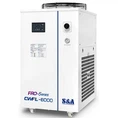
A water chiller is a machine that lowers the temperature of water, usually to a range between 15°C and 20°C, through a refrigeration cycle. This is commonly used in industrial settings to cool large, complex machinery and other high-powered devices that generate a lot of heat.
How does a water chiller work?
Water chillers operate through a refrigeration cycle similar to that of a refrigerator. The process begins with a compressor, which pressurizes and compresses a coolant gas, typically Freon or another similar refrigerant.
The compressed gas enters the condenser, where it releases the heat it has absorbed from the water being cooled. As the gas cools, it liquifies and flows into an expansion valve, where it experiences a sudden drop in pressure. This causes the liquid to evaporate and absorb heat from the water through a heat exchanger.
The now-gaseous coolant flows back to the compressor to begin the cycle again. The cycle continues until the water reaches the desired temperature.
What are the types of water chillers?
There are several types of water chillers, each suited to different applications. Here are some of the most common types:
1. Air-cooled water chillers - These use air to cool the condenser and are useful in applications where water is scarce or expensive.
2. Water-cooled water chillers - These use water to cool the condenser and are more energy-efficient than air-cooled units.
3. Absorption water chillers - Absorption chillers use heat to drive the refrigeration cycle instead of electricity, making them suitable for applications where electricity is not reliable or available.
4. Centrifugal water chillers - These are used in very large applications such as industrial cooling or district cooling systems.
5. Scroll water chillers - Scroll chillers are ideal for smaller applications and are known for their quiet operation.
What are the benefits of using a water chiller?
1. Efficiency - Water chillers are highly efficient at cooling large quantities of water. Compared to air-cooled systems, water chillers use less energy and perform more efficiently.
2. Precision - Water chillers have the ability to maintain a precise temperature range, critical for many industrial applications.
3. Durability - Water chillers are built to withstand the rigors of industrial use and are designed to last for many years.
4. Environmental friendliness - Water chillers are environmentally friendly, as they use efficient cooling methods and don''t rely on chemicals that may be harmful to the environment.
5. Cost-effectiveness - While water chillers can be expensive to purchase, they ultimately result in cost savings due to their efficiency and durability.
Where are water chillers used?
Water chillers are commonly used in the following industries:
1. Manufacturing - Many industries, such as food processing, chemical production, and pharmaceuticals, rely on water chillers to cool their machinery and equipment.
2. HVAC - Water chillers are used in large buildings to cool water that is then circulated through the building''s HVAC system.
3. Data centers - Data centers generate a lot of heat from their servers and other equipment, and water chillers are used to keep the temperature in check.
4. Plastics industry - Water chillers are used in injection molding, extrusion, and blow molding processes in the plastics industry.
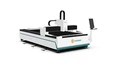
5. Laser cutting - Precision cooling is critical for laser cutting applications, and water chillers are often used to maintain the required temperature range.
What factors should be considered when selecting a water chiller?
When selecting a water chiller, it''s important to consider the following factors:
1. Cooling capacity - The cooling capacity needed will depend on the application and the amount of heat that needs to be removed.
2. Energy efficiency - Look for a water chiller that is energy efficient, as this will result in cost savings over time.
3. Noise level - Some water chillers can be loud, so consider the operating sound level if noise is a concern.
4. Maintenance and upkeep - Water chillers require regular maintenance and upkeep, so be sure to factor these costs into the decision-making process.
5. Space restrictions - Depending on the size and location of the application, space restrictions may impact the type of water chiller that can be installed.
What are some troubleshooting tips for water chillers?
If a water chiller is not functioning properly, there are a few things to check before calling a technician:
1. Check the thermostat to ensure it is set to the correct temperature.
2. Check the circulation pump to ensure it is running.
3. Check the power supply to the chiller to ensure it is connected and functioning properly.
4. Check the refrigerant level to ensure it is sufficient.
If none of these troubleshooting tips work, it''s recommended to call a technician to diagnose and repair the issue.
Conclusion
Water chillers are essential for many industrial applications that require precise temperature control. They offer many benefits, including efficiency, precision, and durability, and can be used in a variety of industries. When selecting a water chiller, it''s important to consider factors such as cooling capacity, energy efficiency, noise level, maintenance and upkeep, and space restrictions. Proper maintenance and troubleshooting can ensure that a water chiller functions properly and efficiently for many years.